
At least 30 dead in Haiti after visit to mountaintop fortress turns tragic

Date:

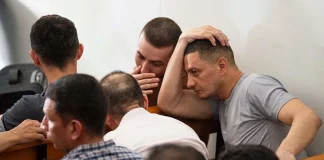
At least 30 people are dead, many of them school-age children as young as 12, after a gathering advertised on TikTok turned tragic on Saturday at Haiti’s premier mountaintop fortress.

The deaths were confirmed by Haiti Prime Minister Alix Didier Fils-Aimé, who told the Miami Herald “the government is mobilizing” the ministry of health, justices of the peace to respond to the tragedy.

The deaths occurred at the historic Citadelle Laferrière fortress in the town of Milot when heavy rains sent the children into a panic, triggering a stampede around 4 p.m.

“The majority of them died by asphyxiation,” Milot Mayor Wesner Joseph told the Herald. Joseph said the actual number of deaths remain unknown because the town’s three justices of the peace live in Cap-Haïtien and local authorities were waiting for them to arrive. The town of about 70,000 residents has no ambulance service and just one police vehicle for 13 officers.

The Citadelle, built between 1805 and 1820 is the largest fortress in the Western Hemisphere and a powerful symbol of Haitian independence.

Thousands of people visit the fortress during Holy Week, and in recent years the pilgrimages have turned into a gathering for youth.

The activity the kids were attending, advertised on TikTok, was not authorized, Joseph said.

In addition to children being asphyxiated, victims were also trampled at the gates of the Citadelle, where crowds started gathering as early as 4:30 a.m. Saturday, the mayor said. Videos advertising the event even ask “if the Citadelle can hold all the people?’

Fils-Aimé called for the public to remain calm.

“The government is monitoring the situation with the utmost attention and calls upon the population to remain calm and exercise caution while awaiting the results of the ongoing investigations aimed at establishing the exact circumstances of this tragedy,” the statement from his office said.

“In these particularly trying circumstances, the Prime Minister and the Government of the Republic reaffirm their solidarity with the victims and the entire affected community.”

Share post:

Les + Populaires

Plus d'Articles
Similaires

Haïti : Peterson Pierre-Louis prend la présidence du Conseil électoral provisoire à un moment critique du processus électoral

Le Conseil électoral provisoire (CEP) haïtien a procédé à une recomposition de son bureau exécutif, portant Peterson Pierre-Louis à la présidence de l’institution en remplacement de Jacques Desrosiers, alors que le pays est engagé dans une phase particulièrement sensible de la préparation des prochaines élections. Le changement intervient à un moment déterminant pour l’institution électorale, confrontée simultanément à la mise en œuvre d’un calendrier resserré, à l’enregistrement des électeurs et des candidats, aux contraintes sécuritaires persistantes et aux interrogations entourant la capacité opérationnelle du pays à organiser un scrutin sur l’ensemble du territoire.

Guadeloupe, Martinique, Saint-Martin, Haïti, Jamaïque… Donald Trump publie une carte plaçant de nombreux territoires sous les couleurs américaines

La Guadeloupe, la Martinique, Saint-Martin, Saint-Barthélemy, mais aussi Haïti, la République dominicaine, la Jamaïque ou encore Cuba : une large partie de la Caraïbe apparaît sous les couleurs américaines sur une carte publiée lundi 7 septembre par Donald Trump. Le président des États-Unis n’a accompagné cette image d’aucune explication.

From Port-au-Prince to the periphery: The ruralization of Haitian gang violence (Report)

Haiti's armed gangs are increasingly expanding from Port-au-Prince into rural areas, adopting hit-and-run tactics including kidnappings, cattle ​theft and roadblocks while security and political responses ‌remain focused on the capital, a new report said on Monday. The analysis, published by the Global Initiative Against Transnational Organized Crime's Haiti ​Observatory, said the shift amounts to more than ​an extension of urban gang activity into the ⁠countryside.

En Haïti, les autorités impuissantes à endiguer la violence des gangs à l’approche des élections 

Plus de 3 000 personnes ont été tuées durant les six premiers mois de l’année, malgré le déploiement progressif d’une nouvelle force multinationale. Les exactions des groupes criminels font planer le doute sur la tenue, en décembre, des élections présidentielle et législatives, les premières organisées dans le pays depuis dix ans.