
By Jacqueline Charles and Alex Harris
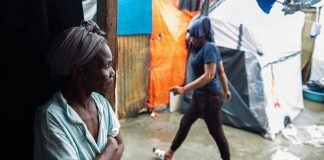
At least 20 people are dead in Haiti and another dozen are missing after a river in the town of Petit-Goâve, southwest of Port-au-Prince, flooded as Hurricane Melissa bombarded the country with heavy rain as it battered nearby Jamaica as a powerful Category 5 storm.
Emmanuel Pierre, the head of the Haitian Office of Civil Protection, told the Miami Herald that the deaths occurred after the Digue River flooded the town, washing away homes and burying them under mud.
“It’s an area where we had visited trying to get people to evacuate, but they did not want to leave,” Pierre said.
The casualties put Haiti’s provisional death toll from Hurricane Melissa at 23. Three storm-related deaths were confirmed while Melissa was still a tropical storm as it approached the country’s southern peninsula.
Of the 20 washed away in the flooded river, 10 were children. Seventeen people are injured and 13 are missing.
The Office of Civil Protection reported dozens of flooded homes in places like Anse-a-Veau, Champ Fleury and Miragoane. The town center of Corail in Grand Anse is “underwater” and several schools are submerged and unusable. More than a dozen rivers are flooded.
The French medical charity Doctors Without Borders/Médecins Sans Frontières said that although its teams have not witnessed significant needs caused by the hurricane, in Port-au-Prince its main concern is the possibility of more heavy rains.
“In the event of floods, our teams are preparing contingency measures such as securing equipment and medicines for our existing projects. We remain ready to respond in other parts of the country as needed,” charity spokesman Brice de la Vigne said.
MORE: ‘Catastrophic’: Hurricane Melissa ravages hospitals, homes in Jamaica and Cuba
De la Vigne said that the charity’s emergency unit is preparing to send teams specializing in health care, logistics and water and sanitation to Jamaica to help with the response.
“We are also preparing supplies to be sent once the airport reopens, so we can provide people with general health care and essential items such as medical kits, non-food items, and critical materials for the provision of safe water, depending on the needs identified,” he added.
Hurricane Melissa struck Jamaica on Tuesday as one of the most powerful hurricanes on record in the Atlantic. While its 185 mph winds and torrential rains submerged western Jamaica, sending residents on rooftops and destroying farmland, in Haiti the storm triggered catastrophic floods.
The country, vulnerable to natural disasters and any significant rainfall, has now had more than a week of rain and is expected to see more when Melissa, which battered Cuba as well on Wednesday, moves into the southern Bahamas and the Turks and Caicos islands.
The hurricane entered western Cuba as a Category 3, but the island’s mountains ripped up the eye, weakening but also broadening the storm. The rain bands now extend across an even wider area, flinging more rain on Haiti for at least another full day.
While there are no official totals yet for the eight straight days of rain Haiti has seen, estimates from the U.S. National Oceanographic and Atmospheric Administration suggest the country saw as many as 20 inches by Monday.
“The threat for flooding in Southern Jamaica and Haiti is going to continue today and into tonight, with a potential for several more inches of rainfall,” said National Hurricane Center Director Michael Brennan in a video update Wednesday.
This story was originally published October 29, 2025 at 1:44 PM.