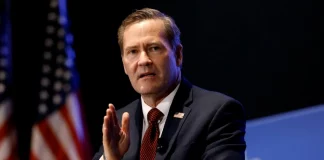

Assistant Homeland Security Secretary Tricia McLaughlin argued in a social media post that the designation was not intended to be long-term and had been granted following an earthquake in Haiti over a decade ago.
The Department of Homeland Security signaled Monday night that it would take a federal judge’s ruling that blocked the Trump administration from ending its Temporary Protected Status designation for Haitians to the Supreme Court.
Supreme Court, here we come.
— Tricia McLaughlin (@TriciaOhio) February 3, 2026
This is lawless activism that we will be vindicated on.
Haiti’s TPS was granted following an earthquake that took place over 15 years ago, it was never intended to be a de facto amnesty program, yet that’s how previous administrations have used it… https://t.co/wejySOSaXJ
Temporary Protected Status was designed to be just that—TEMPORARY.
— Homeland Security (@DHSgov) February 3, 2026
Haiti’s TPS was granted following an earthquake that took place over 15 years ago, it was never intended to be a de facto amnesty program, yet that’s how previous administrations have used it for decades.… pic.twitter.com/Vouh8PGT75
The signal occurred hours after federal judge Ana Reyes, an appointee of former President Joe Biden, indefinitely postponed the termination of the TPS status, ruling Homeland Security Secretary Kristi Noem failed to adequately justify her decision to end the protection for over 350,000 Haitians, according to NBC News.
Assistant Homeland Security Secretary Tricia McLaughlin argued in a social media post that the designation was not intended to be long-term and had been granted following an earthquake in Haiti over a decade ago.
« Supreme Court, here we come. This is lawless activism that we will be vindicated on, » McLaughlin posted on X. « Haiti’s TPS was granted following an earthquake that took place over 15 years ago. It was never intended to be a de facto amnesty program, yet that’s how previous administrations have used it for decades.
« Temporary means temporary and the final word will not be from an activist judge legislating from the bench, » she added.
Temporary Protected Status is given to people from countries that are unsafe because of a natural disaster, political instability or other dangerous conditions. The protections are granted for six, 12 or 18 months and allow the recipient to work in the United States and prevents them from being deported.
Misty Severi is a news reporter for Just The News.