
Voters must be able to turn out without risking death
Listen to this story
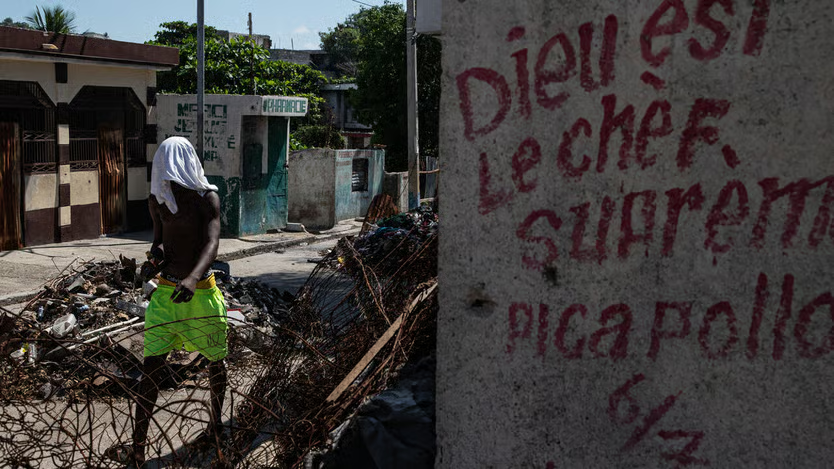
Gangsters control most of Haiti’s capital, Port-au-Prince, extorting money from civilians at every turn. Pedestrians must pay a toll to enter a gang-ruled neighbourhood; traders must pay “taxes”, even on food. The result is ruin. Haitians are more likely to suffer from severe hunger than people in war-racked Sudan. Only 10% of clinics are fully operational. Some 1.4m people have been forced to flee from their homes—about as many as were displaced by a huge earthquake in 2010. But whereas that natural disaster prompted a swift humanitarian response, Haiti’s political collapse has driven donors to despair. A security mission backed by the UN has been running since 2024, but it has done little to improve public safety.
Now there is hope at last. For the first time in years, the gangs are starting to retreat. In 2025 the Haitian National Police began fighting back with help from private security-contractors—including Vectus Global, a firm founded by Blackwater’s Erik Prince. They use small aerial kamikaze drones to hunt gangsters; hundreds have been killed. The UN security mission is being revamped with American backing. It will soon have five times more personnel and an explicit mandate to go after gangsters independently. The first troops are due to arrive from Chad in April. The streets of Port-au-Prince show signs of small improvements, though few areas are yet safe. The acting prime minister since 2024, Alix Fils-Aimé, is in favour with the Americans and has brought a measure of stable leadership.
All this gives Haiti its best chance in years to restore something resembling calm. But reviving a minimally functional state will require much more than blowing up gangsters. Haiti needs a government with a democratic mandate to rebuild the country, and a muscular civilian police force that acts in Haitians’ best interests. This means holding elections in which Haitians feel safe enough to vote as they wish, not as criminals with guns tell them to.

It is a difficult task. Since its first tolerably free elections in 1990, Haiti has endured coups, military rule, vote-rigging and brief foreign occupation. There have been no elections since 2016, when Jovenel Moïse, a failed banana farmer, won the presidency with the support of less than 10% of registered voters. Turnout was 18%, the lowest ever. Moïse was later assassinated. Haiti’s electoral council has scheduled elections for August, but it seems unlikely the country will be ready so soon.
Rather than rushing to hold a vote, the government and its international partners should try harder to improve security. The drones must be targeted and proportionate. When the new UN force arrives it should start by protecting Haiti’s main roads, so that food, goods and people can move again. That would ease hunger and give the economy a chance to grow after seven years of deep recession. The police force—which has been under civilian control only since 1995—should take the lead in consolidating any gains, working street by street to make neighbourhoods not merely gangster-free but reasonably safe.
Then Haitians deserve a choice. The gangs will undoubtedly back pliable candidates, and members of the old corrupt elite will try their luck. What Haitians really need is, if not a Mandela figure, at least a leader capable of getting the basics right: orderly streets and a non-predatory state. It is far from clear who that leader might be. (Mr Fils-Aimé cannot run.) However, better security might give candidates time to emerge. Haitians, mindful of the consequences of bad leadership, should scrutinise them carefully.