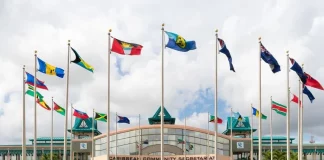

Statement from the CARICOM Eminent Persons Group on the Approaching End of the Transitional Presidential Council

Date:

The Eminent Persons Group (EPG) of the Caribbean Community (CARICOM) has continued to render its good offices to Haitian stakeholders as they address the myriad political, security and institutional challenges facing Haiti at this time. The EPG is particularly mindful that the mandate of the Transitional Council ends on 7 February, 2026.

Given the sustained efforts of CARICOM and the international community in supporting a Haitian-led process, the EPG is deeply concerned by the tardiness of the stakeholders to find common ground and coalesce around a Haitian-led consensual agreement on an alternative transitional process despite the points of convergence in the multiple proposals made public.

The EPG calls on the stakeholders to demonstrate patriotism above all other sentiments if Haitians are to determine their own destiny.

It is vital that stakeholders, civil society and the people of Haiti reach a consensus before 7 February 2026. A failure to do so could lead to unwanted repercussions. Time is, therefore, of the essence!

9 January 2026

Share post:

Les + Populaires

Plus d'Articles
Similaires

Haïti : élections, sécurité, sanctions et Global Gateway: Hélène Roos répond à 15 questions sur l’action de l’Équipe Europe

"De notre côté, comme partenaire, nous prenons nos responsabilités : l’Union européenne dispose d’un régime de mesures restrictives à l’encontre de personnes et d’entités considérées comme responsables d’actions menaçant la paix, la stabilité, ou la sécurité d’Haïti, ou portant atteinte à la démocratie et à l’État de droit. Ce régime n’est pas un instrument électoral et les sanctions européennes ne constituent pas, en elles-mêmes, des critères d’éligibilité au regard du droit haïtien. Elles consistent en revanche en une liste de personnes qui sont interdites d’entrée sur le territoire de l’Union européenne, soit dans ses 27 États membres, ainsi qu’en la possibilité degels d’avoirs. "...

Haïti : le Conseil de sécurité de l’ONU examine lundi la situation sécuritaire et les préparatifs électoraux

Le Conseil de sécurité des Nations unies tiendra lundi 19 octobre une séance publique consacrée à Haïti, suivie de consultations à huis clos, avec au programme la dégradation de la situation sécuritaire, le déploiement de la Force de répression des gangs (GSF) et les incertitudes entourant l’organisation des prochaines élections. Selon Security Council Report, publié le 16 octobre, trois responsables onusiens sont susceptibles de présenter un état des lieux : Carlos Ruiz Massieu, représentant spécial du secrétaire général et chef du Bureau intégré des Nations unies en Haïti (BINUH) ; Jack Christofides, représentant spécial pour la GSF ; et Daniela Kroslak, secrétaire générale adjointe et cheffe du Bureau de soutien des Nations unies en Haïti (UNSOH), dont la participation au briefing reste possible.

Martelly puts elections rumors to rest, registers to run for Haiti presidency

Former Haitian President Michel Martelly has registered to run for the presidency of the Caribbean nation, joining a growing list of candidates hoping to lead a troubled Haiti despite facing sanctions from the United States, Canada and the European Union — or in the case of the former singer, all three. Martelly’s name was among 16 listed Friday on the Provisional Electoral Council’s website as having preliminary registered to run. The list also includes another former president, Jocelerme Privert, and a former member of the lower house of Parliament, Gary Bodeau. Privert who oversaw the country’s last general elections in 2016, has been sanctioned by Canada. Bodeau has been sanctioned by the U.S. Treasury Department under a federal act that targets perpetrators of serious human rights abuse and corruption, and faces Canadian sanctions as well.

Exclusive: Inside Erik Prince’s secretive operation taking on Haiti’s gangs (CNN)

Prince would not disclose the annual fee he receives for work with the Task Force, claiming only that it is a “fraction” of the cost of the short-lived Multinational Security Support mission — an initiative backed financially and logistically by the United States, that once envisaged 5,500 foreign police in Port-au-Prince. “Our cost is one-sixth of what their annual camp cost was,” Prince said. The sum is likely in the tens of millions of dollars. His income will be augmented by a deal to help control Haiti’s porous border with the Dominican Republic for the next 10 years in return for 10% of any new customs revenue collected. The long-term contract has raised criticism locally of how Prime Minister Alix Didier Fils-Aimé is using his mandate as interim leader.