

The Security Council today renewed the sanctions regime concerning Haiti, including its travel-ban, asset-freeze and arms-embargo measures.
By a recorded vote of 14 in favour to none against, with one abstention (Russian Federation), the Council adopted resolution 2831 (2026) (to be issued as document S/RES/2831(2026)).
By its terms, the Council expressed concern at reports of misappropriation, embezzlement and diversion of public resources, which pose a risk to peace, security and stability of Haiti. It also underscored that individuals engaging in, directly or indirectly, or supporting criminal activities and violence involving armed groups and criminal networks that promote violence, or engaging in activities that destabilize Haiti through the illicit exploitation or trade of natural resources, may be listed for travel and financial measures.
By further terms, the text reaffirmed that Member States shall take appropriate steps to prevent the illicit trafficking and diversion of arms and related materiel in Haiti, including through the strengthening of their border control mechanisms. It also called upon the Haitian authorities to strengthen the weapons and ammunition management capacity of the police and armed forces.
Armed gangs have been perpetrating widespread violence in the Caribbean State for several years. The sanctions regime concerning Haiti was established in October 2022 via Council resolution 2653 (2022), with the arms embargo expanded by Council resolution 2700 (2023). In 2025, the Council strengthened the sanctions regime and the Panel of Experts assisting the 2653 Haiti Sanctions Committee, and added two individuals to the sanctions list. While these texts were adopted unanimously, today’s adoption was not.
Haiti Highlights Efforts to Combat Criminal Networks
Several speakers welcomed the adoption as a demonstration of the Council’s determination to continue to combat the criminal networks that threaten security in Haiti and the region.
Among them was Haiti’s representative, who drew attention to recent reports of the Secretary-General and that of the Panel of Experts. They show that the capacity of armed groups to cause harm is based not only on their criminal activities, but also on the existence of financing, supply and support networks, sometimes facilitated by national and international actors with economic resources or political influence, he said. Therefore, it is essential that the sanctions regime address all mechanisms that fuel violence, he stressed.
The phenomenon of supplying gangs with arms and ammunition goes far beyond national borders, he pointed out, adding that prevention requires enhanced cooperation between States of origin, transit and destination, including in the control of cargo, weapons tracing and the sharing of intelligence.
He also outlined his Government’s efforts to strengthen the Haitian National Police, consolidate the Armed Forces and establish specialized judicial structures to fight criminal financing, stressing these national initiatives require predictable international support.
Situation in Haiti ‘One of Most Pressing Crises’ in Region
The representative of Panama, who co-led negotiations on the text, described the situation in Haiti as “one of the most pressing crises besetting our region” and underscored: “We must step up efforts to close the loopholes which facilitate sanctions evasion.”
“It is pivotal to also tackle the networks that allow the gangs to perpetuate and expand their criminal activities”, he said, highlighting the well-documented “symbiotic relationship” between some sectors of political and economic elites and the gangs that hold Haiti hostage. Therefore, it is necessary “to forge ahead with including new individuals on the list of sanctions”, particularly those who use their positions of power and influence to help finance violence and turn a profit.
The speaker for the United States, who also co-led negotiations, urged the international community to support Haiti’s National Commission for Disarmament, Dismantlement and Reintegration. Her country will continue to consider designations through the Security Council and its subsidiary bodies to ensure UN sanctions listings are fit for purpose, she said. “The arms embargo does not apply to the sale, supply or transfer of arms and related materiel or the provision of related assistance and training to the Government of Haiti,” she added.
Risk of Introducing “New Sanctions Criteria”
The representative of the Russian Federation, who abstained, said that while the text contains “seemingly noble elements”, it also carries the risk of introducing “essentially a new sanctions criteria” relating to the misappropriation, embezzlement and diversion of public resources. Such expansive wording is not directly linked to the main criteria for listing laid down by Council resolution 2653 (2022), he added.
While his country’s position in the voting is not motivated by a desire to shield corrupt officials, he said, given the fragile situation in Haiti, any external interference can only aggravate the difficult state of affairs.
Noting the low level of compliance with sanctions both in Haiti and in the countries of origin of smuggled weapons, he added: “If these States took effective measures to staunch the flow of weapons”, that would help address the gangs’ stranglehold over Haiti.
China’s speaker also urged Member States — “especially the country that is the main source of illicit weapons and ammunition of Haiti” — to decisively combat arms trafficking at the source.
Calls to Expand Sanctions List
Welcoming the adoption of the text, France’s speaker said that misappropriation, embezzlement and the diversion of public funds are a source of major concern regarding Haiti. Noting that elections had to be postponed in that country due to instability, he stressed the need to accelerate the deployment of the Gang Suppression Force. He also voiced support for adding supporters of gangs to the sanctions list.
Colombia’s delegate also urged the Council to review the extent of the sanctions. “If we know that 70 per cent of Port-au-Prince is in the hands of gangs,” he added, then it is clear that it is not just the nine designated individuals and two entities who are responsible for the crisis.
The representatives of the United Kingdom and Latvia welcomed the adoption, with the latter noting that the provisions strengthening the accountability framework on misappropriation and diversion of public resources “represent an important step towards ensuring that sanctions can respond more effectively”. Pakistan’s delegate regretted that disagreement over the appointment of Chairs and Vice-Chairs has paralyzed the 2653 Committee like “all other subsidiary bodies of the Council”.
Liberia’s delegate said: “The weapons fueling violence in Haiti are not manufactured in Haiti.” Preventing their trafficking is a shared responsibility, particularly for States of origin and transit. He also highlighted the targeted measures. “They are directed at perpetrators and their enablers, not at Haiti or its people”, he pointed out.
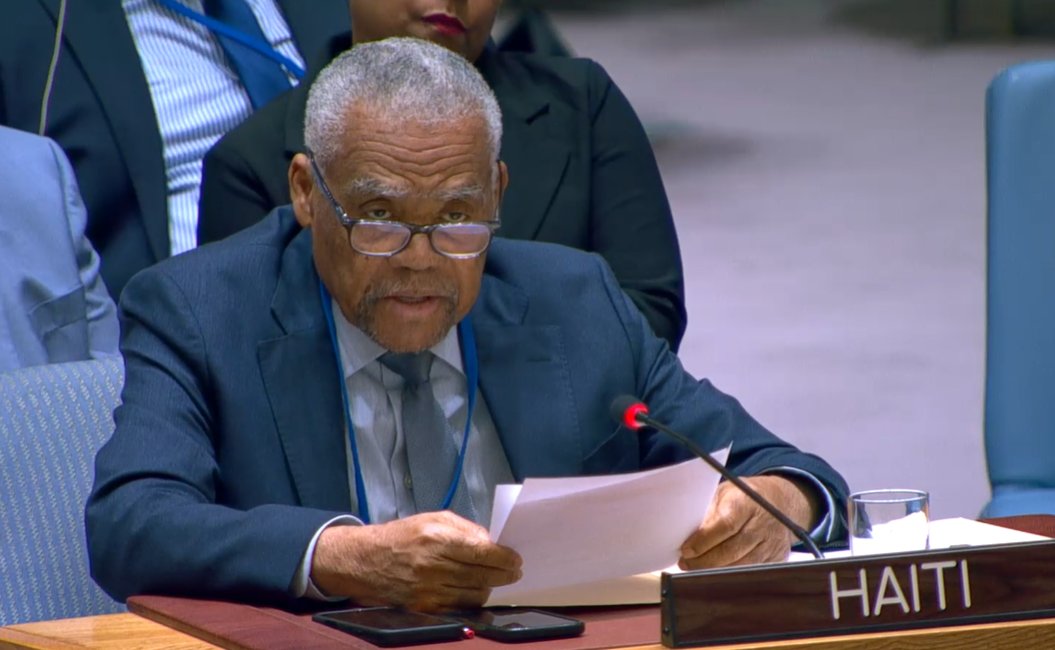
Haiti: sanctions regime must address all mechanisms that fuel violence
©UN Web TV
Ambassador Pierre Ericq Pierre of Haiti welcomed the adoption as a demonstration of the Council’s determination to continue to combat the criminal networks that threaten the peace, security and stability of his country and the region.
The recent reports of the Secretary-General and that of the Group of Experts on Haiti show that the capacity of armed groups to cause harm is based not only on their criminal activities but also on the existence of financing, supply, and support networks, sometimes facilitated by national and international actors with economic resources or political influence.
Therefore, the sanctions regime must address all mechanisms that fuel violence, he said, stressing: “Sanctions cannot be an end in themselves. »
He outlined his Government’s efforts to strengthen the Haitian National Police, consolidate the Haitian Armed Forces and establish specialized judicial structures to fight criminal financing – all of which require predictable international support.
The phenomenon of supplying gangs with arms and ammunition goes far beyond national borders.
Prevention requires enhanced cooperation between States of origin, transit and destination, including in the control of cargo, weapons tracing and the sharing of intelligence.
“The arms embargo can only achieve its goals if its implementation is rigorous, effective and a shared responsibility” by all concerned States, he said.
Stressing the need to translate international commitments, he said: « We need you to support our national capacities for investigation, justice and the fight against impunity, as well as our disarmament, demobilization and reintegration efforts. »
Today 10:57 AM
France says text’s adoption is just the beginning, urging greater action
La 🇫🇷 a voté en faveur du renouvellement du régime de sanctions sur Haïti. Pour rétablir la paix et les institutions démocratiques, nous devons élargir les sanctions à ceux qui soutiennent et financent les gangs, et accélérer le déploiement de la Force de répression des gangs. https://t.co/tztzXNc0tF
— La France à l’ONU 🇫🇷🇺🇳 (@franceonu) October 14, 2026
Ambassador Jérome Bonnafont of France hailed the extension of the Council’s “firm and comprehensive measures” to cut off the flows of arms, ammunition, and funding that fuel criminal gangs.
Misappropriation, embezzlement and the diversion of public funds are a source of major concern and will “continually be subject to particularly acute attention”.
“However, we cannot stop there », he said, noting the recently announced postponement of Haiti’s elections due to instability
“For the Haitian people to deliver their opinion as quickly as possible with full freedom and sovereignty at elections, we must step our efforts and implement the decisions taken by this Council, » he said.
This can be done by accelerating the deployment of the Gang Suppression Force (GSF) so it can be operational as soon as possible and adding to the sanctions list sympathetic supporters of the gang.
“Let us take action to combat impunity and not allow those threatening the stability of Haiti and its people to lay down the law”, he stressed.
Today 10:47 AM
Russian Federation warns text risks introducing new sanctions rules
Ambassador Vassily A. Nebenzia of the Russian Federation, who abstained, said that while the text contains “seemingly noble elements”, it also carries the risk of introducing “essentially a new sanctions criteria” relating to misappropriation, embezzlement and diversion of public resources.
#Nebenzia: The Russian Federation abstained during the vote on the Security Council draft resolution, prepared by the United States and Panama, to extend the sanctions regime against #Haiti. 🔗Read in full: https://t.co/YGdyd6nFoT https://t.co/2ACgAc5wOZ
— Russia at the United Nations (@RussiaUN) October 14, 2026
Such expansive wording is not directly linked to the main criteria for listing laid down in the sanctions regime created by Council resolution 2653 (2022), he added.
His country’s position is not motivated by a desire to shield corrupt officials, he clarified, while stressing that given the fragile situation in the country, any external interference can only aggravate the difficult state of affairs.
He agreed with the assessments of the Group of Experts on the ineffectiveness of the 2653 sanctions regime and the low level of compliance with sanctions both in Haiti and in the countries of origin of smuggled weapons.
“If these States take effective measures to staunch the flow of weapons, then the problem of the gangs’ stranglehold and security problems in this Caribbean State, and in general, would be much less acute,” he said.
Today 10:39 AM
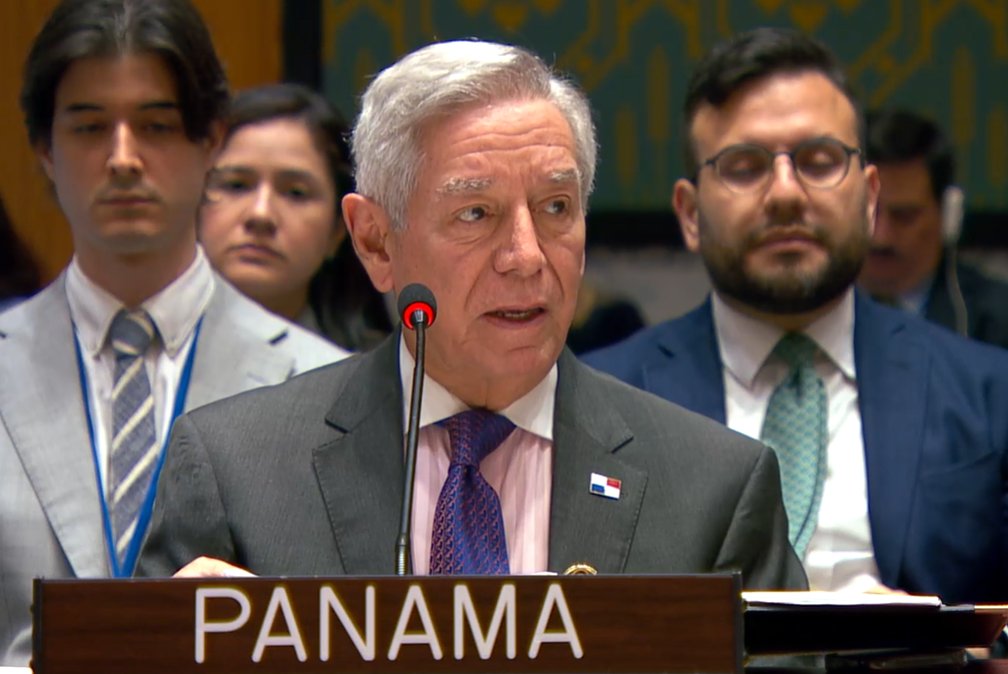
Haiti ‘one of most pressing crises besetting our region’, Panama stresses
©UN Web TV
Ambassador Eloy Alfaro de Alba of Panama said the effective implementation of the arms embargo is crucial.
To tackle violence in Haiti, “it is pivotal to also tackle the networks that allow the gangs to perpetuate and expand their criminal activities”, he said, adding that this “symbiotic relationship” between some sectors of political and economic elites and the gangs that hold Haiti hostage are well documented.
It is necessary “to forge ahead with including new individuals on the list of sanctions”, particularly those who use their positions of power and influence to aid to the financing of violence and turn a profit from their criminal activities.
The effectiveness of sanctions regimes depends not only on the text but also on Member States’ sense of responsibility in guaranteeing compliance with the adopted measures.
“We must step up efforts to the close the loopholes which facilitate sanction evasion,” he added.
Today 10:34 AM
United States: today’s vote affirms strong support for Haiti
We welcome today’s UN Security Council vote renewing the Haiti sanctions regime (travel ban, asset freeze, and arms embargo) and extending the Panel of Experts’ mandate. This vote sends another unwavering signal: the international community stands with the people of Haiti. https://t.co/mSPrssDzQk
— U.S. Mission to the UN (@USUN) October 14, 2026
“Today’s vote is yet another unwavering signal that the international community stands with the people of Haiti », said Deputy Permanent Representative Jennifer Locetta of the United States.
As Haiti continues the fight to regain control of its country, « a clarification must be made », she said.
“The arms embargo does not apply to the sale, supply or transfer of armsor related materiel or the provision of related assistance and training to the Government of Haiti » intended to further peace and security objectives, she said.
She urged the international community to support the country’s national Commission for Disarmament, Dismantlement and Reintegration.
“This initiative will be key to tackling the gangs that are destabilizing the country and offer a pathway towards peace,” she said.
Her country will continue to consider designations through the Security Council and its subsidiary bodies to ensure UN sanctions list are fit for purpose.
“These sanctions are key components of a broader international effort to promote peace and stability in Haiti and in the region,” she said.