
Haiti Calls for Urgent Regional Gang-Fighting Support as US Shies off Funding

Date:

By Sarah Morland

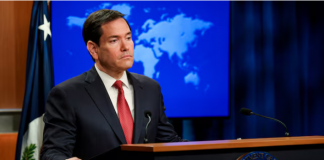
(Reuters) -Top Haitian ministers called for urgent security support from neighbors at a meeting of the Organization of American States (OAS) on Thursday, while the U.S. signaled it would not continue current funding aimed at holding back the nation’s armed gangs.

Powerful gangs, armed with guns the U.N. believes are trafficked largely from the United States and across the land border with the Dominican Republic, have taken control of most of the capital and expanded to the central plateau and agricultural heartlands, displacing over 1 million people.

« While we remain determined to assist the Haitian people achieve the peace, security and prosperity they deserve, the United States cannot continue shouldering such a significant financial burden, » U.S. Caribbean Affairs deputy assistant secretary Barbara Feinstein said at the meeting.

The U.S. has cut much overseas aid and frozen some funding it earlier pledged to support a U.N.-backed mission in Haiti, and earlier this week Secretary of State Marco Rubio suggested that OAS should play a greater role in supporting Haiti’s security, such as mobilizing a force.

« The OAS is uniquely positioned not only as a forum for diplomacy, but as a vehicle for coordinated, concrete action, » Feinstein added.

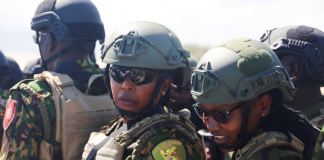
A handful of countries have pledged troops to the mission, but only a fraction of these have deployed. The Kenyan-led force remains under-resourced and has had little success in helping police hold off gangs’ advances in and beyond the capital.

OAS special advisor Jared Genser recommended that unless the mission is proven capable of providing security for Haitians, the U.N. Security Council should vote to convert it to a formal peacekeeping mission – a measure repeatedly requested by Haitian leaders but opposed by veto members China and Russia.

Haitian Defense Minister Jean-Michel Moise said the situation was being fueled by gangs profiting off cocaine trafficking from Colombia to buyer nations and arms trafficking from the United States by sea and across the Dominican border.

« This criminal economy fuels a local war machine, » he said. « Haiti is on the brink of being fully controlled by criminal gangs and we cannot allow that to happen. We desperately need the help of the international community. »

Haiti counts about 12,000 police and 1,000 military officers for a population of nearly 12 million, officials said.

Moise also called for restrictions – including some based on implications in human rights abuses – on selling arms to Haiti’s government to be eased, citing gangs’ easy access to militarized weapons.

(Reporting by Sarah Morland; Editing by Christopher Cushing)
Share post:

Les + Populaires

Plus d'Articles
Similaires

Haïti : élections, sécurité, sanctions et Global Gateway: Hélène Roos répond à 15 questions sur l’action de l’Équipe Europe

"De notre côté, comme partenaire, nous prenons nos responsabilités : l’Union européenne dispose d’un régime de mesures restrictives à l’encontre de personnes et d’entités considérées comme responsables d’actions menaçant la paix, la stabilité, ou la sécurité d’Haïti, ou portant atteinte à la démocratie et à l’État de droit. Ce régime n’est pas un instrument électoral et les sanctions européennes ne constituent pas, en elles-mêmes, des critères d’éligibilité au regard du droit haïtien. Elles consistent en revanche en une liste de personnes qui sont interdites d’entrée sur le territoire de l’Union européenne, soit dans ses 27 États membres, ainsi qu’en la possibilité degels d’avoirs. "...

Haïti : le Conseil de sécurité de l’ONU examine lundi la situation sécuritaire et les préparatifs électoraux

Le Conseil de sécurité des Nations unies tiendra lundi 19 octobre une séance publique consacrée à Haïti, suivie de consultations à huis clos, avec au programme la dégradation de la situation sécuritaire, le déploiement de la Force de répression des gangs (GSF) et les incertitudes entourant l’organisation des prochaines élections. Selon Security Council Report, publié le 16 octobre, trois responsables onusiens sont susceptibles de présenter un état des lieux : Carlos Ruiz Massieu, représentant spécial du secrétaire général et chef du Bureau intégré des Nations unies en Haïti (BINUH) ; Jack Christofides, représentant spécial pour la GSF ; et Daniela Kroslak, secrétaire générale adjointe et cheffe du Bureau de soutien des Nations unies en Haïti (UNSOH), dont la participation au briefing reste possible.

Martelly puts elections rumors to rest, registers to run for Haiti presidency

Former Haitian President Michel Martelly has registered to run for the presidency of the Caribbean nation, joining a growing list of candidates hoping to lead a troubled Haiti despite facing sanctions from the United States, Canada and the European Union — or in the case of the former singer, all three. Martelly’s name was among 16 listed Friday on the Provisional Electoral Council’s website as having preliminary registered to run. The list also includes another former president, Jocelerme Privert, and a former member of the lower house of Parliament, Gary Bodeau. Privert who oversaw the country’s last general elections in 2016, has been sanctioned by Canada. Bodeau has been sanctioned by the U.S. Treasury Department under a federal act that targets perpetrators of serious human rights abuse and corruption, and faces Canadian sanctions as well.

Exclusive: Inside Erik Prince’s secretive operation taking on Haiti’s gangs (CNN)

Prince would not disclose the annual fee he receives for work with the Task Force, claiming only that it is a “fraction” of the cost of the short-lived Multinational Security Support mission — an initiative backed financially and logistically by the United States, that once envisaged 5,500 foreign police in Port-au-Prince. “Our cost is one-sixth of what their annual camp cost was,” Prince said. The sum is likely in the tens of millions of dollars. His income will be augmented by a deal to help control Haiti’s porous border with the Dominican Republic for the next 10 years in return for 10% of any new customs revenue collected. The long-term contract has raised criticism locally of how Prime Minister Alix Didier Fils-Aimé is using his mandate as interim leader.