Haiti’s vicious circle: Funding is needed to end the violence. But the violence means the funding doesn’t come
Date:
Chatham House, The Royal Institute of International Affair
Dr Christopher Sabatini, Senior Research Fellow for Latin America, US and North America Programme
Beyond restoring security, a push to rebuild Haiti’s society and create jobs is vital to any lasting solution. But who will fund such an effort, as the cycle of violence continues?
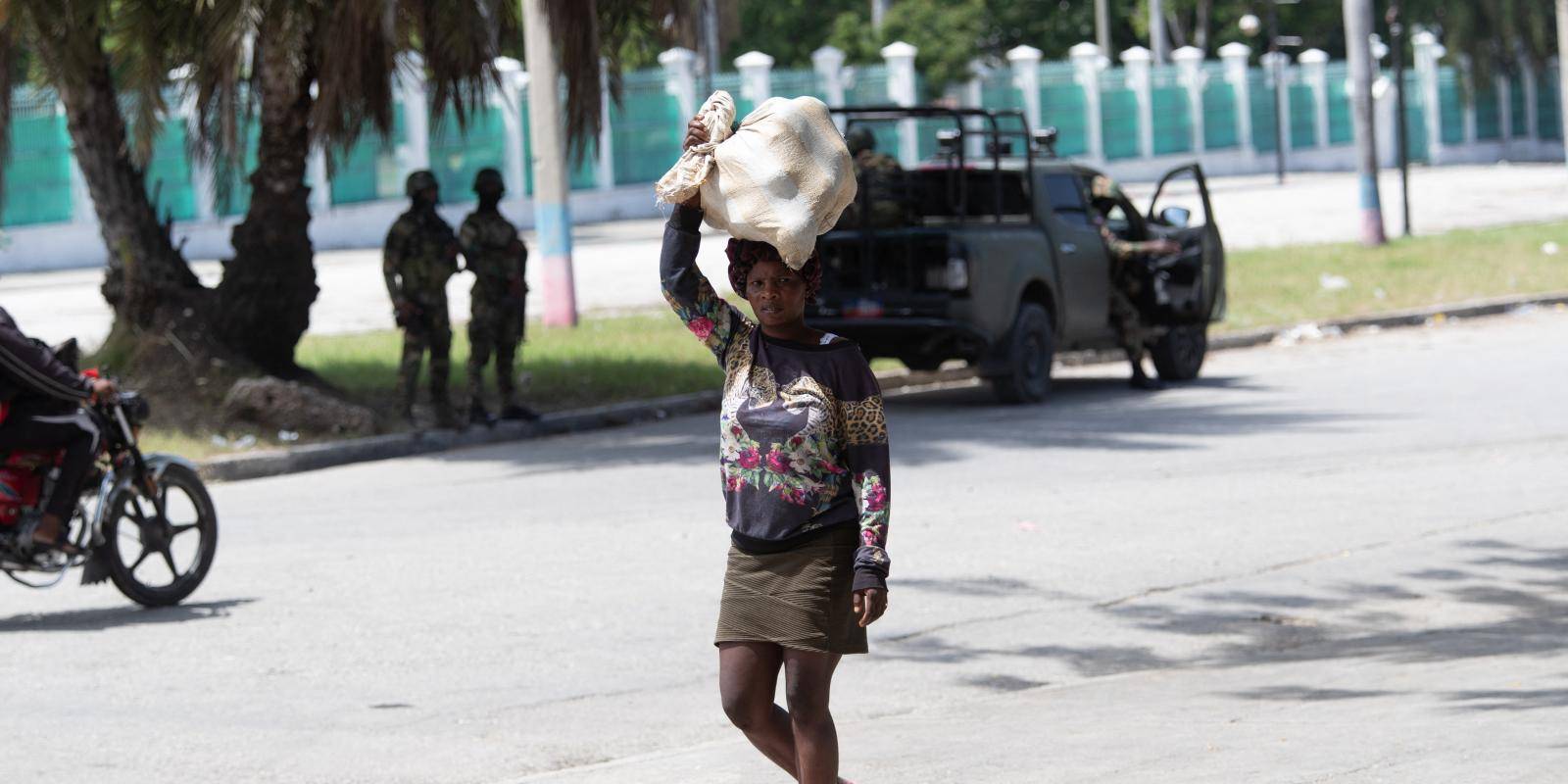
Politics in Haiti is a blood sport. The last elected President, Jovenel Moïse, was gunned down by mercenaries in 2021. Since then, the country has descended into rampant gang violence. Thousands have been killed and abducted in the chaos. Criminals control roughly 90 per cent of the capital city, Port-au-Prince. Legal economic activity has nearly ground to a halt.
Now there is serious doubt on whether the country will have a government after 7 February, when its Transitional Presidential Council (TPC) was originally set to dissolve. Internecine battles have broken out over what should follow the Council, and more specifically who can remain in power.
In recent weeks, several TPC members attempted to remove Prime Minister Alix Didier Fils-Aimé in a palace coup. Those same members have put forward plans for a reduced Council that would include – of course – them. There is a real threat that some Council members will mobilize the gangs to coerce other members and the international community. In response, the US has parked a warship and three coast guard cutters off the coast of Haiti.
The upheaval threatens the future of any government in Haiti and the status of the UN’s new Gang Suppression Force (GSF) mission to the crime-ridden country. What can be done to break Haiti’s cycle of disaster?
Council of chaos
The TPC was established in April 2024, after gangs prevented interim president Ariel Henri from returning to Haiti.
At the time, Haiti lacked an elected government. It still doesn’t have one. The parliament was dissolved in 2020 when its mandate ended without new elections. The hope was that the TPC, created after Caribbean Community (Caricom) negotiations, could provide transitional government until new democratic elections could be held in late 2025, with a new government seated by 8 February 2026.
Even before the TPC’s recent internal turmoil, political gamesmanship and efforts to protect armed allies and secure access to resources hobbled the transitional authority. The first prime minister, Gary Conille, was forced to resign only six months into his term.
And the Council failed to deliver progress on any coherent policy across any area, most importantly security. From January to November 2025 alone, 8,100 people were killed in the country of 11 million, according to UN Secretary General António Guterres – a 20 per cent increase from 2024. Sexual violence has also spiked in recent years.
In addition to the armada floating just outside Port-au-Prince, the US slapped visa restrictions on five of the members of the TPC jockeying for power in the government. At the end of January, US Secretary of State Marco Rubio reported that he had spoken to Fils-Aimé and ‘emphasized the importance of his continued tenure as Haiti’s prime minister to combat terrorist gangs and stabilize the island’ adding that the TPC ‘must be dissolved by February 7 without corrupt actors…’
Violence strangles the economy and the hope for speedy elections
Economically too, the power struggles in the interim government have choked off growth. The World Bank estimates that the crisis had in six years cost Haiti nearly $10 billion a year in lost economic activity by 2024. Small and medium enterprises were particularly affected.
The failure to re-establish even a modicum of security has prevented the planned elections. It became conventional wisdom that attempting to convene a popular vote in a country overwhelmed by gangs would likely – either through coercion, campaign support or running their own candidates – formally turn Haiti’s government over to criminals. Now, with the status or form of an interim government after 8 February uncertain, even an updated plan to hold elections in late 2026 looks unrealistic.
Jobs are critical to offering a legal economy alternative to former or future gang members.
The potential absence of a credible Haitian government puts the UN mission at risk. The plan is to deploy an 11,000-strong multi-national force to crack down on gang leaders and recapture territory, including transportation hubs and economic infrastructure. But that requires an effective government counterpart in Haiti.
Even if current dialogues and negotiations can cobble together a governmental authority, it will likely not enjoy broad support among the political elite. As has been the case for decades, corrupt political and business leaders frozen out of power will use gang contacts to sow discontent and chaos – enforcing a street veto on the next government.
The lack of broad acceptance among the political elites (and their followers) and the spectre of politically directed violence will hobble any future government in its greatest – and long overdue – task: purging, reforming and rebuilding Haiti’s security and judicial sectors.
Any viable solution to the security crisis will require not just effective international and domestic military and police action against gang leaders. It also demands a complete overhaul of Haiti’s police, military forces and intelligence services and a fair and speedy court and penitentiary system to ensure justice for victims, many of them women and children. There must be accountability for the brutal crimes being committed every day.
A lack of funding could be fatal to that effort, and to the more traditional community and development efforts necessary to ensure long-term success.
Like many other countries facing security and humanitarian crises, Haiti confronts a declining global budget for development assistance. With the US Agency for Development (USAID) now abolished by the Donald Trump administration and subsequent cuts to development assistance by the UK, Canada and EU, many of the steps needed to follow reducing gang power, such as disarmament and demobilization, will have scant resources.
Policies and projects to reintegrate gang members and rebuild communities will likely go unfunded. So too will basic development assistance that can boost the economy and generate jobs. And jobs are critical to offering a legal economy alternative to former or future gang members. Without an alternative, many will simply return to crime.
Who will fill this void? The shrunken international development envelope will require others to step in in novel ways. This can include individual country donations to the UN trust fund for Haiti, closer collaboration between private philanthropic organizations and multilateral development banks to ensure community inclusion and sustainability. Remittances from Haiti’s far-flung diaspora can also be better leveraged. But much of this requires a donors’ conference for Haiti, and so far no one has stepped up.
Le Conseil électoral provisoire (CEP) affirme que le processus électoral haïtien enregistre des « avancées significatives ». Mais les chiffres publiés lundi par l’institution donnent surtout la mesure du chemin qui reste à parcourir : 628 755 électeurs inscrits, soit un peu plus de 10 % de l’électorat potentiel selon le CEP, 1 285 centres d’inscription et de vote opérationnels, seulement 30 structures politiques ayant soumis leurs 30 000 membres et sept candidatures à la présidence enregistrées à ce stade.
Le tout intervient alors que le 13 décembre 2026 demeure officiellement la date du premier tour de la présidentielle et des législatives et que l’inscription des candidats vient encore d’être prolongée jusqu’au 9 octobre.
Plus de cinq ans après l’assassinat du président Jovenel Moïse, la justice fédérale américaine ouvre une nouvelle phase d’une enquête qui apparaît désormais explicitement orientée vers l’ensemble du réseau ayant rendu possible le crime : exécutants, organisateurs, financiers, facilitateurs et soutiens.
Les autorités ont rendu public un nouvel acte d’accusation de 85 pages dans le dossier United States v. Pretel Ortiz et al., 22-CR-20104.
Mais au-delà du transfert spectaculaire des détenus, c’est le langage employé par les trois principales agences chargées du dossier qui constitue l’élément le plus important.
Joseph Félix Badio et 17 anciens militaires colombiens détenus en Haïti dans le cadre de l’enquête sur l’assassinat du président Jovenel Moïse ont été extradés dimanche vers les États-Unis à bord d’un avion militaire. Le gouvernement haïtien a officiellement confirmé avoir eu recours aux mécanismes d’extradition avec Washington, ouvrant une nouvelle phase dans une affaire qui, plus de cinq ans après les faits, n’a toujours pas abouti à un procès en Haïti.
La seule radio locale de Petit-Boucan, en périphérie de Port-au-Prince, a cessé d’émettre après l’assassinat, par les gangs, de son directeur, retrouvé mort le 9 septembre. Les journalistes haïtiens dénoncent l’indifférence des autorités.