
A new UN Security Council resolution provides hope for Haitians and the multilateral system. But the February 2026 deadline for the dissolution of Haiti’s temporary government looms.
Expert comment
Published 3 October 2025
Dr Christopher Sabatini
Senior Research Fellow for Latin America, US and the Americas Programme
Only a few months ago, the idea that the UN Security Council (UNSC) would approve a resolution to increase its commitment to Haiti seemed a chimera – despite a prolonged security crisis in the country. More than 1 million Haitians have been displaced by violence. And more than 90 per cent of the capital city is under the control of criminal gangs – who are now extending their reach to rural areas.
China and Russia vetoed previous attempts by President Joe Biden’s administration to establish a UN Peacekeeping mission for Haiti. Plans for an alternative, multinational security support mission (MSS), floundered on the lack of voluntary financial contributions and the reluctance of countries – except Kenya – to commit technical assistance and boots on the ground.
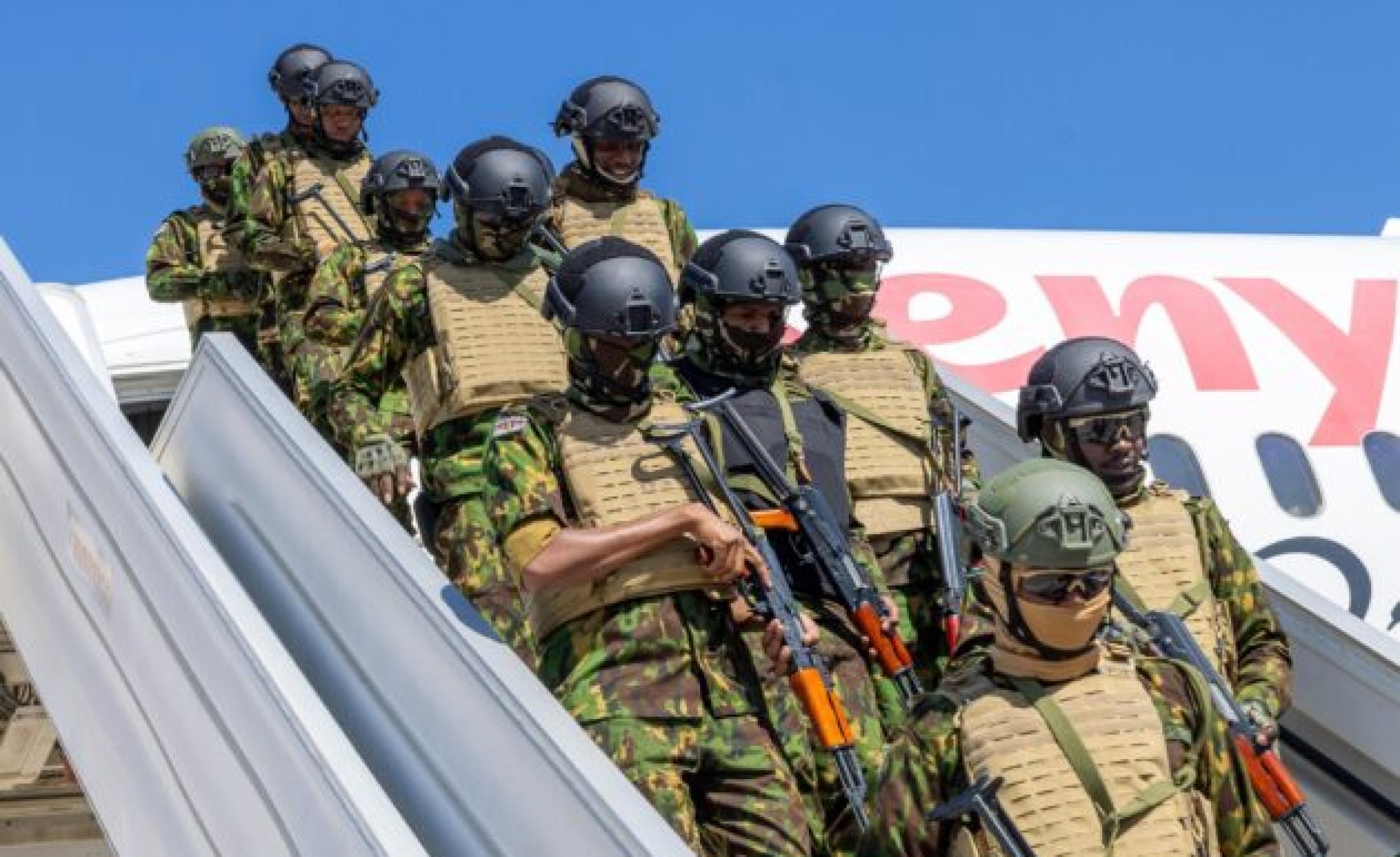
Originally approved by the UNSC in October 2023, the MSS only managed to muster 800 Kenyan police officers. The original plan called for 2,500 international forces. The Kenyans found themselves severely outgunned, and despite some forays to take on the gangs, have been largely holed up in their barracks in Port-au-Prince. The situation in the country looked dire.Related workThis time Haiti really is on the brink. The US and UN must act to restore order
But on 30 September this year, thanks to US, Canadian and Global South leadership, the UNSC approved a ‘gang suppression’ mission to support Haiti. In the end, it took China and Russia’s abstention to get it passed.
There is still much to do to raise the funds and forces necessary to translate the UN resolution into an operational force in Haiti. And help will not come quickly. Some predict it will take six to 12 months before any mission will be fully in place. Most importantly, Haiti’s governance must be addressed, so that a government with local legitimacy can coordinate with the new mission.
Currently, Haiti is governed by a Transitional Presidential Council (TPC). It was established in April 2024 after the previous interim president, Ariel Henry, was prevented from returning to Port-au-Prince by gangs who had seized the airport. The TPC is scheduled to dissolve in February. The urgent question now is, how should it be replaced?
A victory for hope
Despite the challenges, the UNSC vote is a genuine victory, and not only for Haitians. It also provides hope for a multilateral system hobbled by broader geopolitical battles.
The fact that the resolution passed…is remarkable. In the end, it was the support of Global South countries like Mexico and Panama that proved decisive.
The outlook for a successful resolution had arguably never been tougher. China’s agreement to abstain was particularly hard to achieve, according to one source – even more than on other resolutions. Presumably that was because of the framing of the resolution as a ‘gang suppression mission’ – and President Donald Trump’s provocative speech at the UN General Assembly the previous week. The president had insulted the UN and publicly challenged China, polluting the public discussion and making it difficult to align with a US initiative.
The fact that the resolution passed despite that atmosphere is remarkable. In the end, it was the support of Global South countries like Mexico and Panama that proved decisive.
The vote also signalled the international community’s willingness to overcome considerable fatigue relating to Haiti’s crises. Before it, governments had come to feel that nothing could be done to resolve Haiti’s seemingly persistent cycle of underdevelopment, state collapse and security emergency.
The Rough Road Ahead
Now global forces may be shifting in Haiti’s favour. One of the rallying cries has become, ‘not another rescue for Haiti – but the last one’.
For that to become reality, the mission must pursue greater objectives than to cobble together elections as quickly as possible as an exit strategy (an approach that undermined previous missions) or take out gang leaders.
The international community needs to mobilize around the new resolution to restore security while also rebuilding institutions, restoring justice and promoting the conditions for long-term development. That will require long-term commitments in funding, forces and forward thinking.
The largest shadow looming over the new UN resolution is the fate of Haiti’s Transitional President Council (TPC ).
Last week, Canada stepped up with a pledge of $60 million dollars to support maritime security, aiming to choke off the flow of guns into Haiti and illicit commerce out of it. That upfront commitment may well have helped smooth the way for the UNSC approval of the ‘gang suppression’ resolution. It also demonstrated Canada’s willingness to lead on this issue and bolster multilateralism in the face of declining faith in international institutions.
The largest shadow looming over the new UN resolution is the fate of Haiti’s Transitional President Council (TPC ).
The original agreement negotiated with Caricom was to have the TPC establish a security plan and convene elections. But with gangs controlling not just the capital city but large swaths of territory beyond, the international consensus became that elections due to be held in 2025 were not just impossible but dangerous.
That leaves Haiti’s only governmental authority about to lose its internationally deigned legitimacy in only months. That begs the question: who will steward this new UN ‘gang suppression’ mission in the coming years?
The TPC is deeply discredited, marked until recently by internal squabbles.
There are three options.
The first is that the nine-member TPC – either in full or a smaller faction – extends its mandate until elections can be held.
But the TPC is deeply discredited, marked until recently by internal squabbles that in one case resulted in the forced resignation of its prime minister, respected international diplomat Garry Conille. Plans to create courts to investigate cases of human rights abuses and corruption are a welcome development, but for now exist only on paper. Other commitments, such as developing a security roadmap, remain unrealized.
To extend the TPC would also require a unilateral effort that would likely trigger a violent reaction by the coalition of gangs, Viv Ansanm, who could seize on popular dissatisfaction with the TPC to advance their political ambitions.
A second option is a Haiti-led solution to create a technocratic interim government with a defined mandate and mechanisms for accountability. This discussion is already underway in Haiti via an effort to bring together civil society groups, Haitian business and political parties.
A new interim, transitional arrangement will require a more clearly defined remit than for the TPC. It will also need a more realistic timeline for holding elections to replace it and the means to ensure oversight, transparency and that commitments are met.
A third option is for a member of Haiti’s supreme court to assume a custodial role in a transitional government. Such a shift would comply with Haiti’s embattled constitution. But it comes with a challenge: the current supreme court was appointed by previous presidents now considered illegitimate.
This issue is best left to Haitians to address. The good news is that after years of the international community paying lip-service to a Haitian-led solution, Haitians are coming together to propose their answers. Their leadership can build on the commitment now shown by the UNSC and the member countries who not only voted for the resolution but also helped facilitate it. Thanks to their quiet diplomacy and the signalling of financial and political commitment, there is movement. Finally.