

It hasn’t been an easy few years for Haiti’s homegrown musical sound. Crisis in the Caribbean has kept artists from touring, COVID has dampened gatherings and ongoing immigration enforcement in the United States has kept even the most die-hard of fans away.
But on Wednesday, both the sound known as konpa or konpa direk — and the country where the rhythm was born 70 years ago — got some good news: The music was inscribed in UNESCO’s coveted list of Intangible Cultural Heritage of Humanity.
This marks the third time in four years that a cultural touchstone of Haiti has been recognized by the United Nations Educational, Scientific and Cultural Organization. And like soup joumou, the pumpkin dish that celebrates the country’s 1804 independence from France, and then cassava bread, the file was put together under the leadership of Haiti’s then ambassador to UNESCO, Dominique Dupuy.
The inscription, she wrote on X, “brings great joy.”
“After the historic pride of our Grenadiers,” she added, referring to Haiti’s soccer team qualifying for the FIFA World Cup for the first time in over 50 years, “this recognition from the global registers further strengthens our full right to participate in debates, competitions, and international movements. Our contributions to art, to sports, to the advancement of humanity remain possible, always possible.”
Before soup joumou’s 2021 inscription by UNESCO, Haiti had never had a contribution to the list, despite its rich history.
“If the inscription of soup joumou recalled our pioneering role in the international fight for freedom; if cassava marked our place in millennial history and the Caribbean basin — where civilizations, cultures and wounds meet — konpa, in turn, reaffirms our attachment to love, to joy, to freedom: a rhythm that rises with the day, with all its courage, despite all adversity, and that gives tomorrow the scent of hope in the face of all challenges,” Dupuy said.
Dupuy, Haiti’s foreign minister in 2024, submitted the file before taking on the short-lived role. Among her many supporters in the quest was the legendary Haitian guitarist André “Dadou” Pasquet, who brought his own flair to the genre and died last month in Miami. She paid homage to him in her post, along with “all the communities that carry this knowledge, who mobilized with warm hearts both in Haiti and in the diaspora at every stage of this journey.”
“I am delighted to see this music that shapes our identity now being celebrated within UNESCO,” she added.
Konpa, or Compas, “transcends social classes, forging a unique characteristic with Haitian identity,” the team wrote in their application discussing how the art form shapes Haitian identity.
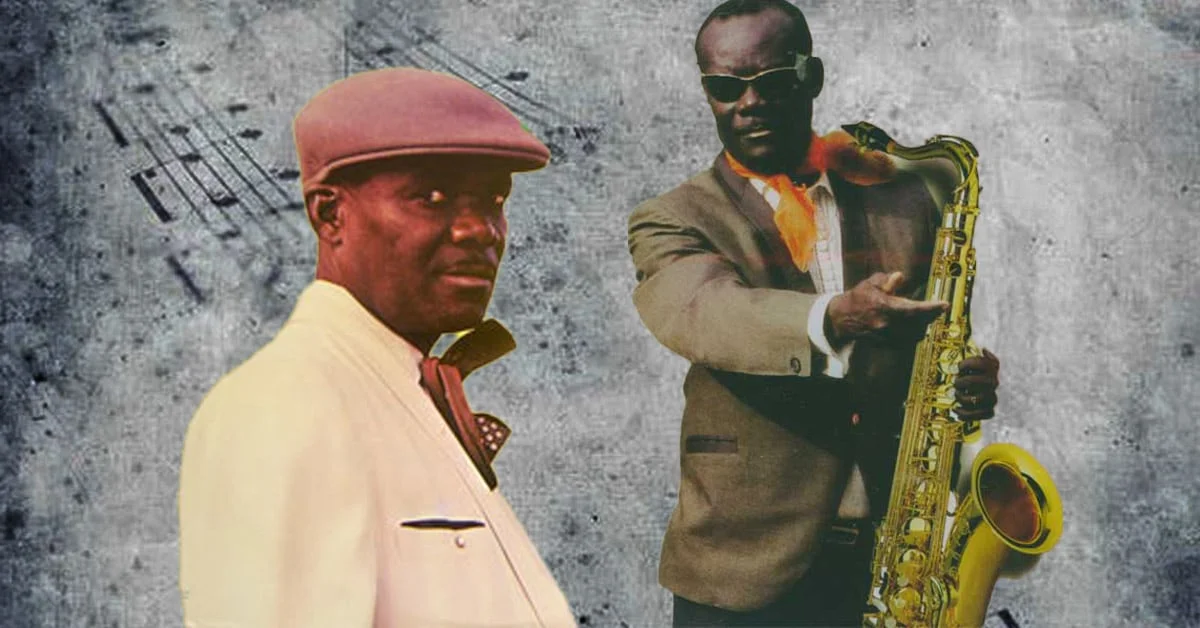
Founded by Nemours Jean-Baptiste in 1955, the musical genre is not only deeply rooted in Haitian society, but it has crossed borders, occupying record shops on the French island of Martinique, the ballrooms of Miami and the favelas of Brazil. Even Paris hasn’t been out of reach, with the city hosting some of the biggest concerts by Haitian artists in recent years.
“Konpa has gone beyond Haitians and Haiti,” said Fabrice Rouzier, one of the country’s leading musicians. “Konpa direk is purely Haitian.”
Jean-Baptiste, he said, was inspired by another Haitian musical genre called “rale bouret,” leading some to say konpa’s birth preceded its official founding. There are also claims that it’s a slower form of meringue, inspired by the sounds of a popular band in Haiti in the 1950s.
“The fact remains that there are two elements in konpa — the gong and the drums,” Rouzier said, that when played together, gives only one element: “konpa direk.”