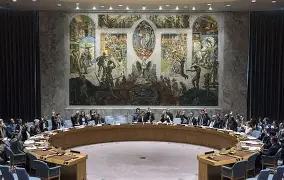

Haiti’s deepening crisis has reached a critical phase, senior UN officials warned the Security Council on Wednesday, as powerful gangs continue to expand their control across the country.
With the political transition set to expire on 7 February, officials cautioned that escalating violence, entrenched criminal networks and mounting humanitarian needs risk pushing Haiti further into instability unless security and political efforts are urgently sustained.
Carlos Ruiz-Massieu, the head of the UN Integrated Office in Haiti (BINUH), said the country had entered a “critical phase” in efforts to restore democratic institutions, calling on Haitian actors to contain political fragmentation and prioritise elections.
“Let us be clear: the country no longer has time to waste on prolonged internal struggles,” he said, stressing the need for continuity of governance arrangements beyond the February deadline and sustained coordination to bring the transition to a close.
Mr. Ruiz-Massieu said recent steps toward elections were encouraging, citing the adoption of an electoral decree on 1 December and the publication of an calendar for going to the polls later that month.
New provisions on voter registration, overseas voter participation and women’s representation could boost inclusivity if effectively implemented, he added.
Security still fragile
But progress on the political front is unfolding against a deteriorating security landscape.
Gangs continue to mount coordinated attacks, control key economic corridors and agricultural regions, and force mass displacement – stretching police and humanitarian capacity to the limit.
The murder rate in 2025 rose by nearly 20 per cent compared with 2024, he said.
Some security gains have been made. Police operations, supported by the Security Council-authorised Gang Suppression Force, have reopened roads in parts of Port-au-Prince and the Artibonite Department, while state presence around the capital’s Champ de Mars has been gradually restored.
Mr. Ruiz-Massieu cautioned, however, that such gains remain fragile and risk reversal without sustained pressure and basic service delivery.
Read our explainer on the situation in Hait: Why the crisis is deepening, and what comes next
Gangs reorganising and restructuring
The evolving violence reflects a deeper transformation of Haiti’s criminal landscape, according to John Brandolino, Acting Executive Director of the UN Office on Drugs and Crime (UNODC).
Once-fragmented gangs have reorganised into structured criminal networks with defined leadership, territorial ambitions and diversified revenue streams.
Coalitions such as Viv Ansanm have coordinated large-scale attacks on police, prisons and economic infrastructure, he said, allowing gangs to consolidate control over Port-au-Prince and strategic corridors into Artibonite and Plateau Central.
Extortion has become a core revenue source, alongside trafficking in drugs, weapons and ammunition.
Implications for regional security
UNODC said the crisis is increasingly regional, driven by adaptive arms-trafficking routes, illicit financial flows and corruption. Despite enforcement efforts, traffickers continue to shift routes through weaker ports and offshore transfers to evade embargo controls.
Both officials underscored the importance of the transition of the Multinational Security Support Mission into the Gang Suppression Force and the establishment of the UN Support Office in Haiti, calling for predictable funding and continued international backing.
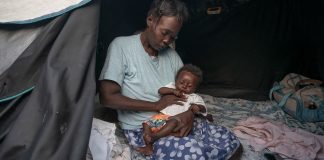
Beyond security, the humanitarian situation remains dire. Around 6.4 million people require assistance, with Haiti among the least-funded humanitarian responses globally.