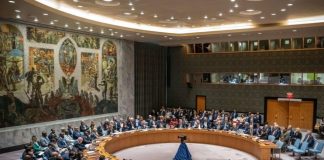

The UN voted to replace Kenya’s mission in Haiti with a new global gang suppression force after 15 months of Kenya’s deployment, a move that exposes the weakness of the mission in restoring order in Haiti.
The Kenya-led Multinational Security Support Mission (MSS) in Haiti is set to wind down following a new United Nations Security Council resolution establishing a larger and considered more comprehensive force, the Gang Suppression Force (GSF) to tackle the worsening insecurity in Haiti.
The development marks the end of a 15-month deployment that began in December 2024, when the first group of Kenyan police officers arrived in Haiti with hopes of restoring order to a country ravaged by armed gangs and political instability.
Initially hailed as a turning point, the Kenyan-led mission struggled to achieve its objectives. While the MSS managed to secure key government buildings and provide limited protection in certain parts of Port-au-Prince, questions persist about what the mission actually achieved. As the root causes of Haiti’s crisis, political vacuum, economic collapse, and distrust of foreign troops, remain unresolved.
A new force, a familiar challenge
The Gang Suppression Force (GSF), authorized by the UN Security Council in late September, will replace the MSS. Backed by Panama and the United States, the resolution establishes a 5,550-strong multinational contingent with a 12-month mandate.
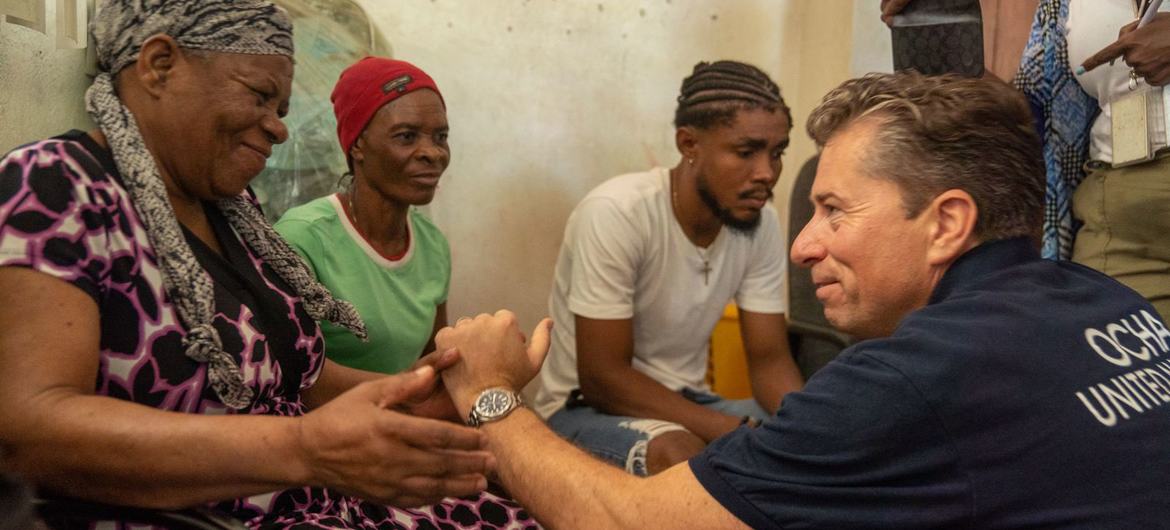
According to the UN, the GSF’s main objectives are to neutralize armed gangs, secure key infrastructure, and facilitate humanitarian access for vulnerable populations. It will also support the Haitian National Police in reclaiming control from gangs that currently dominate much of the capital and beyond.
« The new mission represents a shift in strategy, » the UN said. « It will conduct intelligence-led operations, work closely with national institutions, and help create conditions for long-term peace and development. »
But the creation of the GSF also signals an implicit admission that the Kenya-led mission failed to meet expectations. The MSS was supposed to stabilize Haiti’s security situation enough for political dialogue to begin; instead, violence intensified.
Kenya’s complicated role
Kenya’s involvement in Haiti drew mixed reactions both at home and abroad. President William Ruto framed the mission as a contribution to global peacekeeping, but critics in Kenya questioned its legality and cost.
Haiti, meanwhile, has had a long and painful history with foreign interventions, from US occupations in the 20th century to repeated UN peacekeeping missions, many of which left behind legacies of abuse and mistrust. The Kenyan-led MSS, though smaller in scale, was often seen by many as a continuation of this pattern.
The Kenyan government insists that its leadership in Haiti demonstrates that « Africa is not a bystander in global affairs. » Yet this assertion questions. Is Africa asserting agency or simply filling roles in Western-designed interventions?
In a statement issued on October 1, the Ministry of Foreign and Diaspora Affairs acknowledged the transition, saying the new resolution « reflects the impact of Kenya’s leadership in mobilizing international attention and forging consensus when others hesitated. »
The ministry praised the establishment of the GSF as a necessary strengthening of international efforts and highlighted Kenya’s « courage and principle » in deploying first.
However, Kenya’s deployment faced legal and political opposition at home, as many questioned whether the move had parliamentary approval and whether Kenyan police, themselves accused of human rights violations domestically, were equipped to operate in Haiti’s complex terrain.
For many, the deployment symbolized not Pan-African solidarity, but Kenya’s growing alignment with US and Western strategic interests, especially at a time when Washington sought a willing partner to spearhead intervention in Haiti after years of failed UN missions.
In a post, a former cabinet secretary and economic adviser to the president took to X to criticize the Haiti deployment, calling it « a misadventure » and suggesting that former US Ambassador Meg Whitman wielded outsized influence over Kenya’s foreign policy during her tenure.
« The fact that the Trump Administration admitted during the special UN session on Haiti that MSS lacks a broad mandate backed by a strong UN Resolution is just a tip of the iceberg, » he wrote.
« Ambassador Meg Whitman literally ruled Kenya for two years. The Haiti misadventure was one of the many personal decisions that she took. Anthony Blinken was hapless in her wake. Kenya will continue paying the price for Meg’s reign of terror for a long time to come. »
In another post, he applauded the UN’s decision to replace the MSS, writing:
« I salute the UN Security Council for the resolution to set up a Global Force for Haiti. This should now put to an end the Kenyan unilateral mission and end the misadventure. I appeal to the Inspector General to deploy the returning forces to the streets of Nairobi to put an end to the daylight muggings and pickpocketings. »
Haiti’s Endless Interventions
For Haitians, the transition from MSS to GSF will not be new. Since the coup against President Jean-Bertrand Aristide in 2004, Haiti has hosted a succession of UN missions, MINUSTAH, MINUJUSTH, and now the GSF, all supposed to bring stability but leaving behind scars of abuse, unfulfilled promises, and deepening dependency.
As the new GSF prepares to take over, skepticism remains high. Another foreign military mission may offer only temporary relief to a crisis rooted in historical exploitation and political exclusion. Kenya’s withdrawal closes one chapter of a mission that began with bold rhetoric and ends with sober lessons, chief among them, that stability cannot be imported, and sovereignty cannot be outsourced. For Haiti to truly rebuild, the international community must finally listen to the Haitian people rather than speak for them.