
Already mired in an insecurity crisis that has displaced hundreds of thousands, Haiti now faces expanding gang-controlled trafficking corridors and growing multinational collaboration among regional criminal groups, threatening to further deepen the Caribbean nation’s turmoil.
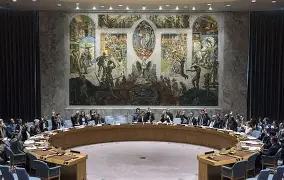
The United Nations warned Monday that Haiti is “rapidly becoming a central hub” for international drug trafficking as gangs in the country expand ties with organized crime networks abroad, amid a worsening security crisis.
The UN said criminal gangs are increasingly battling for control of territory in the capital and beyond, forcing hundreds of thousands of Haitians into displacement and worsening the nation’s humanitarian and economic crises.
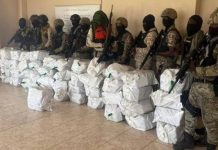
The record seizure of 1.05 tonnes of cocaine by Haitian authorities in July 2025—the largest in over 30 years—highlights the country’s “pivotal role” in the trade. In the following weeks, two Haitian nationals were arrested in Jamaica with more than 1,350 kg of cannabis.
UN investigators said the drugs reportedly originated in South America and were destined for the Caribbean and the U.S. The UN Office on Drugs and Crime also reported trafficking from Haiti to Europe, including the seizure of 1,156 kg of cocaine in Belgium in August 2025 traced back to Haiti.
Haiti’s status as a drug transit hub is long-established. The U.S. has listed the country among 23 major drug transit or production nations for 36 consecutive years, most recently in September, and has classified it a “major drug transit country” since 1989.
The UN expressed new concern over Haiti’s expanding role in multinational trafficking operations, with networks from The Bahamas and Jamaica increasingly involved. The organization said the record seizures “indicate sophisticated, coordinated and established trafficking routes that require a robust regional response by law enforcement agencies.”
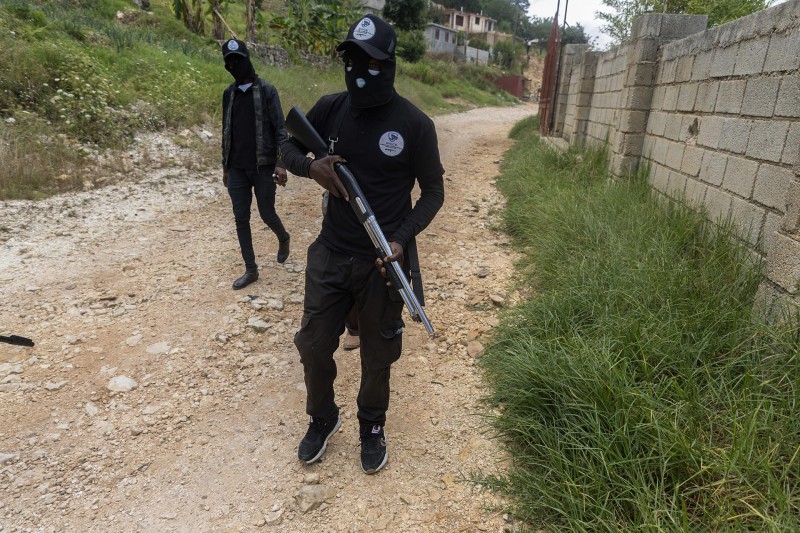
Gangs have “entrenched” themselves along key transit routes in and out of Haiti’s capital, Port-au-Prince, and along the border with the Dominican Republic, using them not only for drug smuggling but also for weapons and migrant trafficking. Some gangs reportedly extort tolls from boats and carry out armed robberies at sea.
Source UN « Record cocaine seizure in Haitian waters underlines country’s ‘pivotal’ trafficking role »
A record seizure of cocaine off the coast of Haiti has underlined the island nation’s “pivotal role in trafficking routes linking South America, the Caribbean and the United States of America,” according to the United Nations.
Haiti is in the grip of a security crisis as gangs battle for control of territory in the capital and beyond while continuing to expand their criminal activities.
Insecurity has caused the displacement of hundreds of thousands of Haitians which has added to the humanitarian and economic crises the country is grappling with.
It is feared that gangs are increasingly working with international organized crime networks to traffic drugs.
What drugs have been seized and where?
A record 1,045 kilograms of cocaine was seized in July 2025 near Haiti’s Île de la Tortue off the north coast of the Caribbean nation in a maritime operation by Haitian authorities. It was the country’s largest drug bust in over 30 years.
Just two weeks later, 426 kg of cannabis were confiscated in Petite-Anse, near Cap-Haïtien again in the north of the country.
There have been additional seizures wider afield. Two Haitian nationals were arrested in Jamaica, also in July, with over 1,350 kg of cannabis.
Where are the drugs being shipped to?
The cocaine which was seized in July is believed to have originated in South America and was destined, so investigators think, for distribution across the Caribbean and the US.
There is also recent evidence received by the UN Office on Drugs and Crime (UNODC) of drugs being shipped to Europe. In August 2025, Belgian authorities seized 1,156 kg of cocaine in the port of Antwerp in a container originating from Haiti.
How are gangs in Haiti involved?
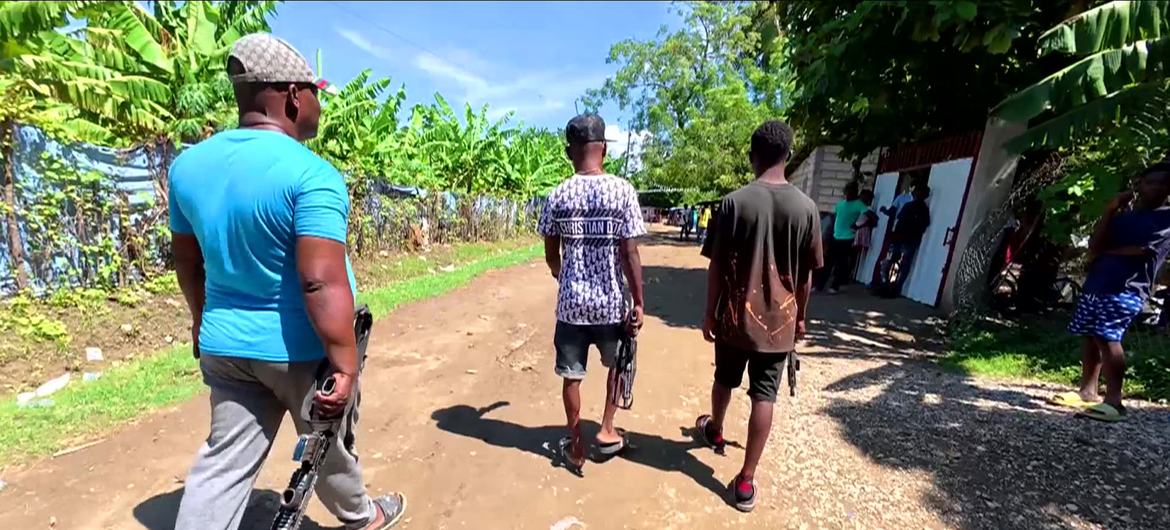
The largest gangs have entrenched themselves along strategic corridors in and out of the capital Port-au-Prince as well as along the border with neighbouring Dominican Republic controlling key transit routes for drugs as well as other contraband, including arms.
The control of domestic routes allows gangs not just to extort the local population but also to move drugs around with impunity, much of it destined for export.
Some gangs are reported to extort tolls from boats and engage in armed robbery at sea, exerting some level of control over trade and trafficking routes.
United Nations
Armed gang members walk through a neighbourhood of Port-au-Prince
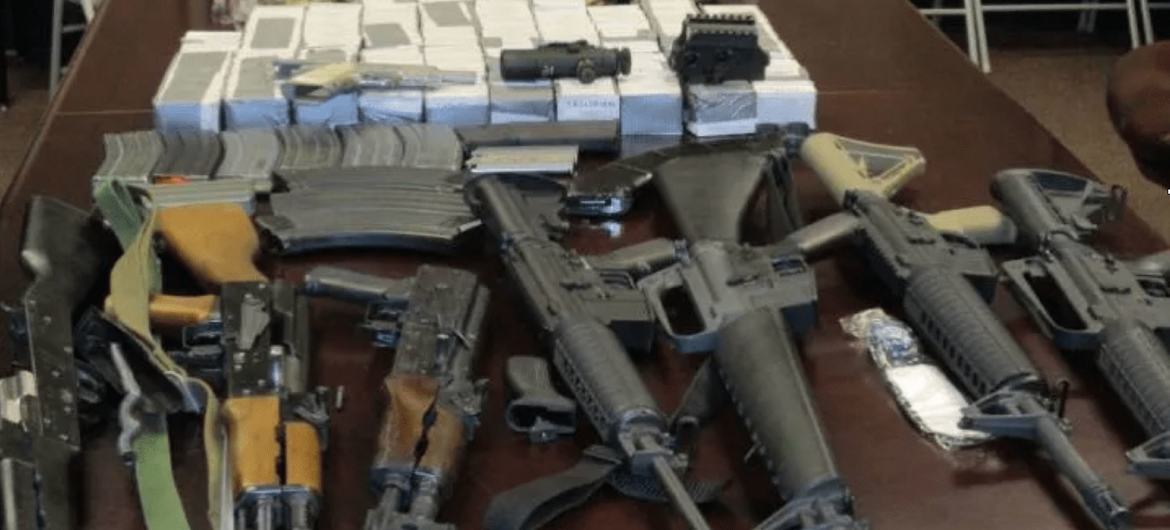
Intelligence from Jamaica also links firearms seizures to a guns-for-drugs trade involving Haitian gangs.
Why has Haiti become a transshipment point for drugs?
Much of the international drug trafficking activity has been centred around Île de la Tortue which has long been a strategic point for transnational criminal operations, partly due to its considerable size and remoteness.
It was historically exploited by pirates and, in recent decades, by organized criminal networks involved in drug trafficking, human smuggling and other illicit activities.
Its geographical position, which provides direct maritime access to the Bahamas and Jamaica, as well as the Turks and Caicos Islands, makes it suitable as a logistics and storage platform for illicit shipments.
© CPB/HSI
Weapons and ammunition are often trafficked into Haiti along the same routes as drugs.
Traffickers have been able to exploit Haiti’s struggles to build a robust justice and penal system which could deal with the expansion of criminal gangs and the illegal activities they are engaging in.
What is the regional impact?
Haiti is rapidly becoming a central hub in a multinational trafficking network. The traffickers involved in the cocaine shipment were Bahamian and Jamaican nationals, underscoring the presence of regional actors collaborating with Haitian counterparts.
The seizures of drugs both in Haitian waters and in Europe indicate sophisticated, coordinated and established trafficking routes that require a robust regional response by law enforcement agencies.
Newly established drug routes are also overlapping with migrant smuggling operations, in which Haitian nationals are increasingly involved.
Meanwhile, the drug trade contributes to regional instability, undermines governance, disrupts economies and fuels violence.
Ports, trade routes and tourism sectors in affected countries face increased security challenges and reputational damage.
How is UNODC supporting Haiti’s efforts to combat drug trafficking?
UNODC is reinforcing border security, strengthening maritime control, advancing intelligence-led policing and addressing the corruption and financial crime that allow trafficking networks to operate.
The agency’s work begins at the borders, where Haiti remains highly vulnerable to illicit flows.
A nationwide border-management initiative designed to increase interdiction capacity at ports, airports and land borders has been launched at the request of the Haitian authorities.

© US Coast Guard
The Haitian Coast Guard repatriates migrants who had fled the country through established trafficking routes.
At sea, UNODC’s Global Maritime Crime Programme is focused on strengthening the Haitian Coast Guard, which plays a critical role in securing maritime routes that are heavily used for narcotics and human trafficking.
On land, UNODC is strengthening the ability of law enforcement to carry out intelligence-led operations against organized criminal groups involved in migrant smuggling, trafficking in persons and overlapping criminal activities. The exchange of information between Haiti and regional partners, which is essential for identifying and dismantling cross-border criminal networks, has also been stepped up.
Recognizing that drug trafficking is enabled by entrenched corruption and the laundering of criminal proceeds, UNODC is implementing government initiatives aimed at strengthening institutional integrity and accountability.
Specialized tribunals are being launched which are capable of handling cases involving financial crime, money laundering, gang-related offences and other sensitive criminal matters, with the objective of reducing impunity and restoring confidence in the justice system.